In short
The article argues that agentic browsers are creating a new web layer in which assistants retain context, interpret pages and perform tasks across sites. Realising that model requires layouts that accommodate browser panels, structured interfaces between sites and agents, and clear user controls over agent access and actions.
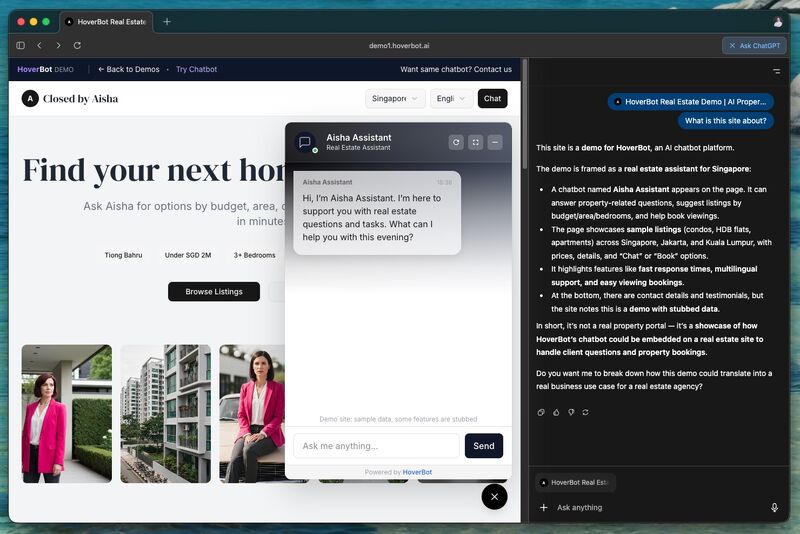
A chatbot sits alongside your tabs, always present and ready to summarise a news story, check a site's legitimacy, surface alternative opinions or pull background on an author. On shopping sites it can compare prices or explain a product before you buy.
The layout problem
The idea is powerful. But the web as it stands is not ready. Add a chatbot panel and many sites collapse into awkward layouts. They were designed for MacBook screens, not for a browser split down the middle. Then comes the clash of bots. A site's own widget competes for attention with the browser's agent, sometimes both expanding at once and breaking the experience.
The protocol gap
The deeper gap is protocol. Today there is no common way for websites to talk to these agents. No secure method exists to share product data, trigger flows or hide redundant elements. Without that layer, agents are left to scrape, guess or risk exposing users to malicious code.
What is needed
What is needed is a standard. Sites should be able to mark their widgets so the browser hides them when an agentic panel is active. At the same time, the browser agent should be able to call the widget's existing API. That way the agent can fetch product details or run the same flows the widget was designed for, without breaking the layout or duplicating logic.
The benefits are clear. Persistent conversation across tabs, context that follows you and navigation that feels seamless. But without new design rules and integration standards, half the web will look broken and trust will lag.
A new layer
The agentic web is more than an add-on. It is a new layer of the internet. Think of it like responsive design in 2010 or HTTPS in 2015. Each was a shift that required new thinking and new conventions. The agentic layer will be similar.
Browsers will need to signal their capabilities. Sites will need to expose structured endpoints. Users will need controls over what agents can see and do. The web has always evolved through cooperation, and this shift will be no different.
The opportunity is clear. Agents that travel with you across sites. Conversations that remember context. Shopping comparisons that run without opening ten tabs. But only if standards emerge and the web adapts quickly enough.
Frequently asked questions
- What is an agentic browser?
- An agentic browser integrates an AI assistant into the browsing experience. The assistant sits alongside open tabs and can summarise stories, examine a site's legitimacy, find alternative opinions, research authors, compare prices and explain products. It can maintain conversation and context while the user moves between sites.
- Why do agentic browser sidebars break some website layouts?
- Many websites were designed for full-width laptop screens rather than a viewport divided between the page and an assistant panel. Reducing the available space can produce awkward layouts. A site's own chatbot may also compete with the browser assistant, particularly when both interfaces expand at the same time.
- What standard does the agentic web need?
- Websites need a common way to communicate with browser agents. A standard could let sites identify widgets that should be hidden when an agent panel is active. It could also allow the browser agent to use a widget's existing API, preserving established product-data and workflow logic without duplicating interfaces.
- What controls do users need in agentic browsers?
- Users need controls that determine what browser agents can see and what actions they can perform. Browsers also need to signal their capabilities, while sites expose structured endpoints for supported interactions. These conventions would help agents retain context and perform tasks across sites without relying on scraping, guessing or unsafe access.
Sources
- Introducing ChatGPT Atlas · OpenAI
- Assistant Panel · Perplexity
- Dia Browser | Plans · Dia
- ChatGPT agent System Card · OpenAI
- Permissions · World Wide Web Consortium
About the author
Founder & CEO at HoverBot
Founder of HoverBot, where he leads product strategy and applied AI architecture, and CTO and co-founder of WTFox.ai. Nineteen years in software engineering, most recently as Software Architect at Mercer, where he shipped HR chatbots and OCR claims processing on Azure AI, and as tech lead at Darwin and Technosoft SEA, after engineering roles at Sberbank, Veon, and Softline. Hands-on with architecture decisions, deployment operations, and benchmark-driven quality optimization. Based in Singapore.
- 19 years of software engineering, architecture, and engineering leadership
- Founder of two AI startups: HoverBot and WTFox.ai
- Applied AI: conversational systems, RAG pipelines, agentic workflows, and safety controls
- Enterprise AI delivery: HR chatbots and OCR claims processing on Azure AI at Mercer
- Led engineering teams of 10+ as tech lead and software architect
- Cross-industry: enterprise HR and benefits, banking, telecom, automotive, e-commerce and marketplaces
- Writes on AI chatbot architecture, agentic systems, and deployment patterns at vitaliks.me