In short
In 2025, HoverBot's platform evolved from a generic chatbot widget into a configurable system serving Real Estate, SaaS, and Life Science use cases. Development centred on knowledge quality, safety controls, tenant-level configuration, operational performance, embedding flexibility, commerce-style conversations, and groundwork for tool-using assistants.
HoverBot shipped 52 production releases in 2025, delivered 214 customer-facing features, and processed 12.4 million tokens as the product evolved from a generic chatbot widget into a configurable platform for Real Estate, SaaS, and Life Science use cases.
The numbers are not here to signal scale. They are here to show pace and direction. HoverBot is still early, but the platform matured through steady weekly shipping, tighter controls, and continuous improvement driven by real usage.
What "major release" and "feature" mean
HoverBot counts a major release as a customer-visible production update shipped that week.
A feature is a user-visible capability such as a new admin control, ingestion option, guardrail rule, flow, analytics view, or embed customization. Internal refactors are not counted.
Three vertical tracks, one platform
Real Estate work centered on structured lead qualification and fast handoff, grounded in listing FAQs, policies, and property information.
SaaS focused on support bots grounded in docs and changelogs, plus admin visibility and on-scope behavior to reduce risky or irrelevant answers.
Life Science emphasized knowledge-heavy Q&A based on product sheets and procedures, with stronger sensitive data controls and auditability.
These were not three separate products. They were three tracks that shaped how the same platform features were packaged and configured.
Chat-to-buy arrived in 2025
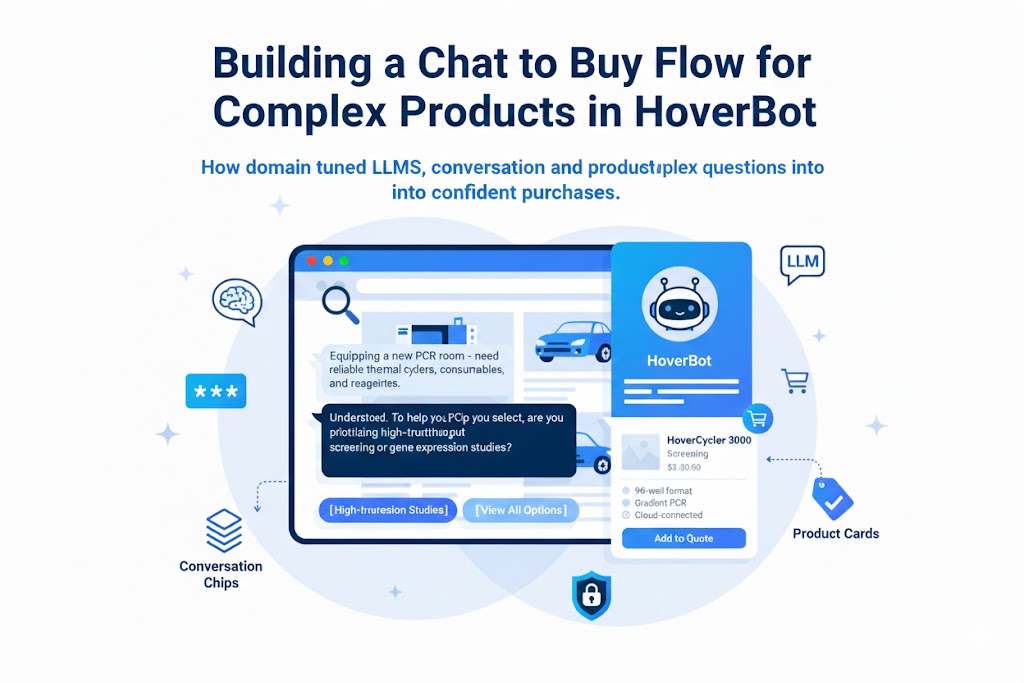
A key shift this year was shipping chat-to-buy capabilities. Instead of stopping at Q&A, HoverBot started supporting commerce-style conversations that guide users from discovery to decision. That meant building reusable conversation patterns like product exploration, structured option capture, and next-step prompts that can hand off to a checkout, a quote request, or a sales workflow depending on the tenant.
This became especially useful in Real Estate and Life Science flows, where users often need clarity and confidence before they take the next step.
Where the 214 features went
Most shipped work landed in four areas:
- Knowledge quality, files, text, URLs and tuning, plus an unanswered questions loop
- Safety and trust, guardrails, PII masking, audit logs
- Configuration at scale, multi-tenant controls, per-bot prompts, tone, skills
- Operations and embedding, stability, latency, widget flexibility, token tracking
Token usage and what it taught
HoverBot processed 12.4M tokens in 2025. Token tracking became a discipline tool, not a vanity metric. It helped measure whether changes reduced wasted context, whether flows made conversations tighter, and whether guardrails prevented long, unhelpful completions.
The main takeaway was simple: efficiency comes from product design. Better retrieval, tighter flows, and safer guardrails reduce cost while improving outcomes.
What's next in 2026
In 2026, HoverBot moves from a bot that answers questions to an assistant that can act.
We're adding more agentic capabilities, meaning the bot can plan and execute multi-step work, use tools when needed, and stay within clear permissions and policies so actions remain predictable and auditable.
We're also pushing Agentic Web integration, publishing a simple capability manifest and endpoints so external agents can discover what a bot can do and interact with it without scraping pages. The goal is straightforward: an agent can browse, ask HoverBot for tenant-specific knowledge, and trigger only the actions that are approved.
Frequently asked questions
- How many releases and features did HoverBot ship in 2025?
- HoverBot shipped 52 production releases and 214 customer-facing features in 2025, while processing 12.4 million tokens. A major release meant a customer-visible production update shipped that week. A feature meant a user-visible capability, including an admin control, ingestion option, guardrail rule, flow, analytics view, or embed customization. Internal refactors were excluded.
- How did the platform differ across Real Estate, SaaS, and Life Science?
- Real Estate configurations focused on structured lead qualification, fast handoff, listing information, policies, and property FAQs. SaaS work focused on support grounded in documentation and changelogs, with administrative visibility and on-scope behaviour. Life Science configurations emphasised knowledge-heavy answers based on product sheets and procedures, together with sensitive data controls and auditability.
- What does chat-to-buy mean for a chatbot?
- Chat-to-buy extends a chatbot beyond answering questions into conversations that guide users from discovery toward a decision. The described patterns include product exploration, structured option capture, and next-step prompts. Depending on the tenant, the conversation can hand off to a checkout, quote request, or sales workflow.
- What agentic capabilities were planned for 2026?
- The planned agentic capabilities would let the assistant plan and execute multi-step work, use tools when necessary, and operate within defined permissions and policies. The roadmap also included a capability manifest and endpoints through which external agents could discover available functions, request tenant-specific knowledge, and trigger only approved actions without scraping pages.
About the author
AI Product Engineering Team
Cross-functional team of AI engineers, product managers, and support operators building customer-facing chatbot systems in production environments. We ship weekly releases informed by production telemetry, closed-loop conversation reviews, and benchmark-driven evaluation cycles.
- Customer support automation and intelligent routing systems
- RAG pipeline design and guardrails for regulated workflows
- Operational analytics and closed-loop quality improvement
- Multilingual NLP and entity-level PII masking pipelines
- Production deployments across e-commerce, real estate, and SaaS verticals